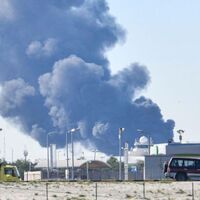



(CN) - In Louisiana's West Ascension Parish, where the Mississippi River slips past the unmarked graves of enslaved people who once toiled on sugar plantations, the predominantly Black community of Modeste has endured for generations. Families there trace their roots to the plantations, worshiping in modest churches, tending modest homes, and guarding a unique heritage along a stretch of riverbank now unfortunately known as part of "Cancer Alley."
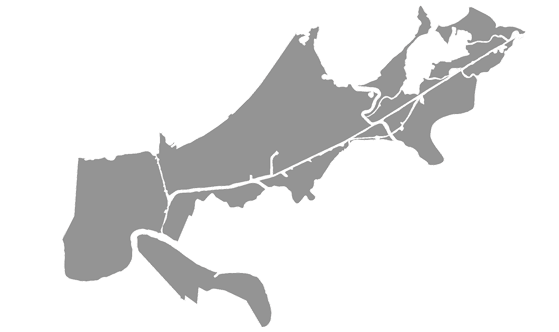
Yet today that legacy is under siege again by the proposed RiverPlex MegaPark - a 17,000-acre industrial sprawl promising steel mills, chemical plants, and billions in corporate investment - in what residents call a textbook case of environmental injustice and civil rights neglect: powerful interests sacrificing a historic Black community's health, homes and ancestral ground for economic gain.
Rural Roots Louisiana and Mt. Triumph Baptist Church filed three lawsuits this week to halt what they describe as a secretive, legally flawed rush to transform their corner of the world. The suits target Louisiana Economic Development, the Port of South Louisiana, and the U.S. Army Corps of Engineers for fast-tracking more than $600 million in public incentives and approvals for Hyundai Steel, CF Industries and ExxonMobil without required public notice or historic preservation steps.
In a statement Thursday, Modeste resident and Rural Roots member Twila Collins said the neighborhood was never consulted about the project.
"Money is flowing, and dump trucks are already rolling all day and night," Collins said. "We have had to fight just to understand when and how huge companies are being allowed to threaten our homes and our heritage using our own tax dollars."
Two of the complaints filed in state court zero in on transparency failures. One challenges a cooperative agreement with Hyundai that funnels up to $100 million for land purchases, $100 million in construction reimbursement, and $1.2 billion in local tax breaks, all without the legally mandated public disclosure or State Bond Commission approval. The second accuses the Port of South Louisiana of authorizing up to $400 million in revenue bonds this past August without publishing the required legal notice, stripping residents of their 30-day window to object. Louisiana Bucket Brigade is a co-plaintiff in both.
A separate federal suit accuses the Corps of letting CF Industries begin extensive ground disturbance before locating known or suspected burial sites of enslaved people and consulting with their descendants, in violation of the National Historic Preservation Act.
"In pushing through this industrial expansion, the state of Louisiana and the Army Corps of Engineers have disregarded basic steps mandated by law," said Pastor Harry Joseph of Mt. Triumph Baptist Church. "I don't think the state or the federal government thought about the graves of our ancestors or any of the cultural and historic heritage and resources of Modeste, Donaldsonville, and West Ascension Parish. The government is neglecting the graves of people who were enslaved there and threatening the future of these historic communities."
The project drew White House attention this past May, when President Donald Trump promised Hyundai executives he would personally clear any permitting obstacles. The plaintiffs argue they are not anti-development, only opposed to development that steamrolls the law and the people already living in its path.
Attorneys Pam Spees of the Center for Constitutional Rights and Jen Duggan of the Environmental Integrity Project, co-counsel on the federal case, called the process astonishingly opaque.
Speaking by phone Thursday, Spees discussed the environmental justice concerns in Ascension Parish particularly around the proposed Hyundai Steel plant in Modeste. The already heavily polluted area will see increased emissions from Hyundai, two ammonia-producing plants and the Ascension Clean Energy Clean Hydrogen Works facility. The project aims to capture some emissions but will still increase pollution.
"All of these will be emitting more pollution in a place that's already at extremely high levels," Spees said, noting the massive project includes a seven-mile CO2 pipeline. "It turns out that this had been in the works for quite a while and it had been subject to a lot of secrecy. Local officials and state representatives had entered into these nondisclosure agreements and so a lot of this was being kept under wraps."
Spees said the state constitution requires public notice when an agency incurs such debt.
"Public notice isn't just a formality, it exists for a reason, and it's really important," she said, adding Louisiana Governor Jeff Landry signed a bill in 2024 that shields certain economic development records from public view. "When you have this kind of lack of transparency and public notice, we can see what happens."
The plaintiffs seek to void the Hyundai agreement, block the port's bond issuance until proper notice is given and force the Corps to stop work until burial sites are identified and community consultation begins.
Source: Courthouse News Service