


BATON ROUGE, La. (CN) - In a win for environmentalists, a federal judge found a coastal project in Louisiana's Atchafalaya Basin was approved in violation of both the National Environmental Policy Act and Clean Water Act.
Environmental groups sued the Army Corps of Engineers in May 2024 over the approval of a river diversion project in the largest remaining contiguous tract of wetland forest in North America. They said the project would lead to over-sedimentation, destroying wetlands, decimating wildlife including crawfish, and leaving New Orleans and Baton Rouge more vulnerable to flooding over the next 50 years.
"It is clear that the Corps has not determined that it has minimized adverse environmental impacts when it has not analyzed the environmental impacts to begin with," U.S. District Judge Brian A. Jackson of the Middle District of Louisiana wrote in a 38-page ruling Tuesday.
Jackson vacated the East Grand Lake Project permit, finding it "was illegally issued." He sent it back to the Corps for review.
Jackson said while the state may have conducted a thorough study prior to issuing the permit, "the Corps has failed to indicate in the EA that it reviewed the applicant's analysis of these elements or that it conducted its own independent analysis. Because of this, the public has no access to nor an understanding of the Corps' reasoning."
He noted nine pages of the corps' analysis were copied and pasted from the permit application and provides its own analysis in three paragraphs. Jackson also said the corps did not sufficiently analyze alternatives and wrongly suggested compensatory mitigation wasn't necessary.
The plaintiffs complained the corps appeared to have approved the East Grand Lake project without conducting any research of its own or issuing an Environmental Impact Statement, required under the Clean Water Act. Jackson found the impact statement was not required.
Although the project is called a "swamp enhancement project," plaintiffs said in a news release issued with their lawsuit in May 2024, "experience and sound science demonstrate that the project will lead to increased sedimentation in the East Grand Lake area. ... Sedimentation severely harms the basin because it decreases flood storage capacity, and the basin is a vital part of Mississippi River flood control management."
If the Corps had done the required statement, it would have known the risk of sedimentation and loss of flood mitigation in the basin from the project, the plaintiffs argue.
In his ruling, Jackson found the corps violated the Clean Water Act in allowing the state's Coastal Protection and Restoration Authority's permit for the dredging and filling of wetlands.
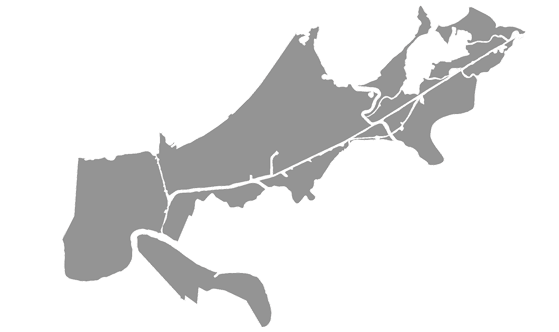
Located in south central Louisiana, the basin - a combination of wetlands and river delta where the Atchafalaya River meets the Gulf of Mexico - spans 1.4 million acres. It supports 300 bird species and yields 23 million pounds of crawfish annually, making it the most productive swamp ecosystem in the world. Grand Lake specifically is considered the most important estuary for fish in the eastern portion of the basin.
The plaintiffs are Atchafalaya Basinkeeper Inc., Louisiana Crawfish Producers Association-West, Waterkeeper Alliance, Healthy Gulf and Sierra Club, Delta Chapter.
According to the plaintiffs, over the past two decades, the Army Corps of Engineers, acting at the request of the state's Coastal Restoration Authority, has approved at least three other projects against local opposition and without scientific backing in the Atchafalaya Basin, including "Buffalo Cove," "Coon Trap," and "Beau Bayou." They claim each has had dire consequences for the Atchafalaya Basin, resulting in too much sedimentation.
Jackson found the corps did not mention the other projects in its summary of extensive public comments and failed to analyze what bearing their results might have on the East Grand Lake Project.
Deep water habitat within the basin is being lost at an alarming rate, due in large part to excessive sediment and contorted distribution of sediment. Without deep water, fish cannot survive low water seasons. The basin also loses capacity to hold floodwaters as it fills in.
Dean Wilson, executive director of Atchafalaya Basinkeeper, called Jackson's ruling important Tuesday evening in a statement: "By doing sediment diversion projects in the name of water quality, the state of Louisiana is destroying the future of south-central Louisiana. The basin's massive loss of flood capacity of the Morganza Spillway will be doom for all of us."
Wilson added he is "very proud of all of the parishes that stood up in support of this lawsuit, despite political pressure." Louisiana is divided into parishes instead of counties.
Neither the U.S. Corps of Engineers nor the Coastal Protection and Restoration Authority immediately responded to requests for comment.
Source: Courthouse News Service