

By Saurav Mukherjee
Mumbai (Maharashtra) [India], June 5 (ANI): In a move to shield the economy from global headwinds, the RBI's Monetary Policy Committee on June 5 kept the repo rate unchanged at 5.25% and retained its 'neutral' stance.
Governor Sanjay Malhotra called it a strategic 'hawkish pause' aimed at curbing inflation risks while ensuring long-term macroeconomic stability.
Economists on Friday termed the Reserve Bank of India's (RBI) latest monetary policy a balanced and well-calibrated approach to navigating a challenging global environment, as the central bank sought to address external vulnerabilities while keeping growth and inflation concerns in focus.
Economists like DK Joshi from Crisil and Abhishek Bisen from Kotak Mahindra AMC have largely praised the calibrated approach; they caution that the 'hawkish undercurrent' suggests future borrowing costs may remain elevated.
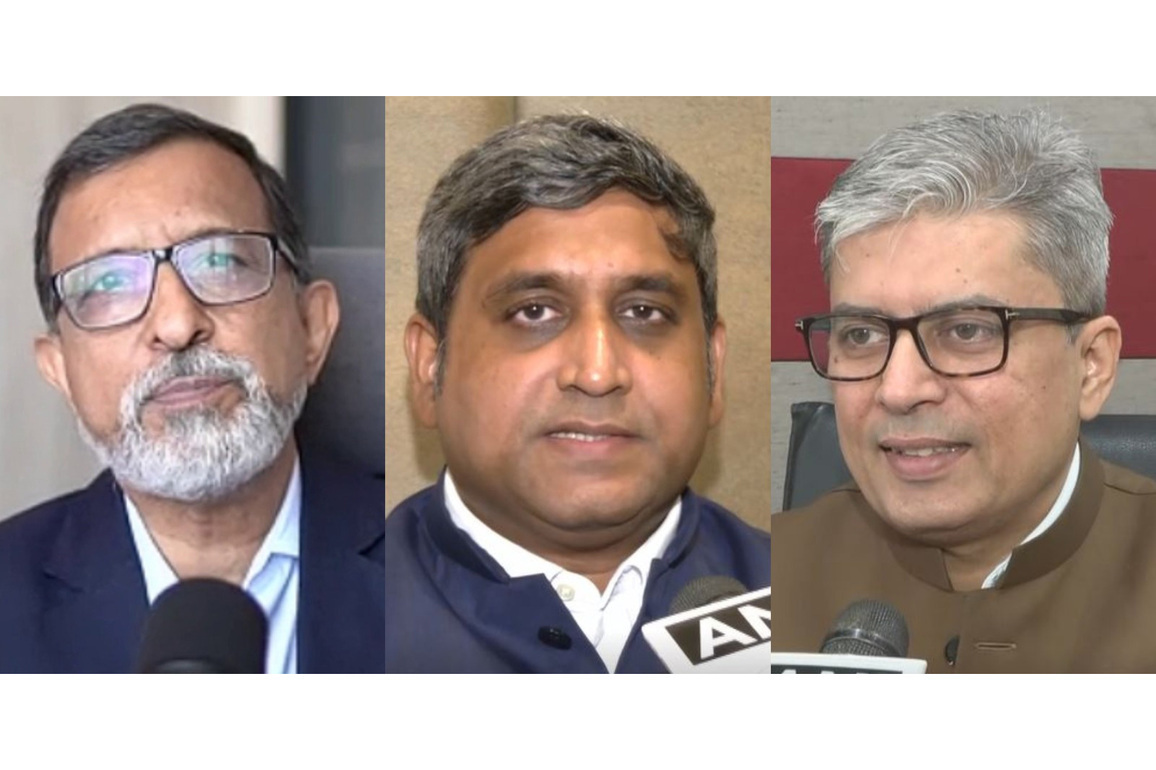
While speaking to ANI, DK Joshi, Chief Economist at Crisil, emphasised that the true essence of the announcement lay in targeting external vulnerabilities.
'I think they have taken a balanced view of the economy... and the more action today, in today's policy, came on the major pain point, which was capital inflows not being sufficient to finance your current account deficit,' Joshi noted.
To rectify this, a bouquet of complementary measures from both the RBI and the government was introduced to aggressively stimulate dollar inflows.
Echoing the sentiment on market alignment, Abhishek Bisen, Head of Fixed Income at Kotak Mahindra AMC, told ANI News, 'RBI's decision to hold rates at 5.25% per cent was largely on expected lines and a welcome move, especially with markets already pricing in nearly 75 bps of tightening over the next 12-15 months. The market reaction was positive and yields eased across the yield curve.'
However, Bisen cautioned that 'this policy carries a hawkish undercurrent, balancing inflation risks while acknowledging growth moderation.'
The focus on the external sector comes as the RBI lowered its domestic growth projections for FY27 to 6.6 per cent from 6.9 per cent earlier, while hiking its FY27 CPI inflation projection to 5.1 per cent from 4.6 per cent due to rising input costs.
Commenting on this macro-economic trajectory, Debopam Chaudhuri, Chief Economist at Piramal Finance, warned that the 50-basis-point hike in inflation projections--reaching 5.9 per cent by Q3 of FY27--will keep long-term borrowing costs elevated for corporates.
Chaudhuri stated that an interest rate hike cycle has effectively commenced, adding, 'I expect a rate hike as early as February 2027, post which we will see much more significant rises in borrowing costs.'Despite these internal pressures, India's foreign exchange reserves remained very healthy at USD 682.3 billion as of May 29, 2026.
Joshi dismissed immediate concerns over recent dips, stating, 'I think we look at the sufficiency of the reserve in terms of how many months of imports it can cover... I think this is a sufficient amount of reserves that the central bank has.'
Market experts strongly lauded the strategic moves to deepen the debt market and attract foreign capital. The RBI expanded specified securities to include new 15, 30, and 40-year G-Secs.
Bisen noted, 'The proactive steps to attract foreign capital, including tax exemptions on G-Secs and expanded FAR, are particularly constructive. These, along with liquidity management, should help shore up forex reserves, support the INR, and contain imported inflation.'
Joshi added that the expanded tenures and a favourable taxation regime will encourage capital into the government bond market from short, medium, and long-term perspectives.
Similarly, Chaudhuri highlighted that relaxed FPI limits for longer-tenor government bonds will successfully attract foreign capital, support the INR, and eliminate the fear of a liquidity 'crowding out' effect despite rising government borrowing.
Looking ahead, Bisen observed that 'there were hardly any misses--communication remained consistent, with a strong focus on external vulnerabilities and inflation risks.'
He concluded that while the policy path remains data-dependent, 'with global uncertainties persisting, RBI is likely to stay cautious by closely monitoring developments before concluding any policy rate decision in the next August policy.' (ANI)