


(CN) - A Fifth Circuit panel appeared divided Monday on the constitutionality of a Louisiana law allowing police officers to order people not to come within 25 feet of them.
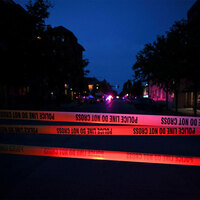
Act 259, passed in 2024, makes it a crime for a person to approach within 25 feet of a police officer after the officer has ordered them to stop approaching or to retreat. Shortly before the law took effect, a group of media companies, including major ones like USA Today Co. (formerly known as Gannett) and Nexstar, brought suit, challenging the law. They argue Act 259 impinges on journalists' ability to engage in newsgathering.
In January last year, U.S. District Judge John deGravelles of the Middle District of Louisiana issued a preliminary injunction blocking certain Louisiana officials from enforcing Act 259, finding the plaintiffs were likely to succeed on their claim that the law is unconstitutionally vague. The Barack Obama appointee found the law doesn't give police any standards for when they can and can't invoke a 25-foot buffer zone, which he said "allows for arbitrary and discriminatory enforcement."
"An officer may give an order for a legitimate reason, i.e., to protect bystanders from hazards, but the officer may just as easily give an order for no reason at all," deGravelles wrote.
But Caitlin Huettemann, a lawyer with the Office of the Louisiana Attorney General, told the panel Monday that deGravelles' injunction was based on "a series of absurd hypotheticals and base conjecture." She said the plaintiffs would need to have shown that the law "is impermissibly vague in every single one of its applications."
U.S. Circuit Judge Stephen Higginson asked about similar police buffer laws in other states, saying they have restrictions that Louisiana's doesn't, such as requiring that a person be interfering with police activity.
"It looks to me like this is much more vulnerable under a vagueness claim," he said.
Huettemann said Louisiana's law contains "factual predicates" that restrict when an officer can order someone to stop approaching, such as that the officer must be engaged in the "lawful execution of his duties."
Higginson asked whether this means a journalist could disregard an order to stop approaching when an officer is behaving unlawfully, such as by using excessive force. Huettemann said a case like that "would have to be teased out on an as-applied basis."
Grayson Clary, an attorney representing the plaintiffs, told the panel the law gives officers "standardless discretion" by making it so that "any officer can order a person to stay back for any reason or for no reason."
Clary compared this case to cases like City of Chicago v. Morales, in which the U.S. Supreme Court struck down as unconstitutionally vague a city ordinance allowing police officers to order anyone they reasonably believe to be a gang member to disperse if they are loitering in a public place with other people for "no apparent purpose."
But U.S. Circuit Judge Kyle Duncan pushed back on this comparison, suggesting the ordinance in Morales is distinct from the law in this case.
"In Morales, one has the right to be on a public sidewalk and associate with someone for no apparent purpose," Duncan said. "Why does one have a right to come within 25 feet of a police officer?"
"Specifically for newsgathering purposes," he added, "I don't think I've ever read a case that says there are unlimited newsgathering rights under the First Amendment, and they include coming within 25 feet of a police officer."
Senior U.S. Circuit Judge Carolyn King, a Jimmy Carter appointee, joined Duncan, a Donald Trump appointee, and Higginson, an Obama appointee, on the panel.
Source: Courthouse News Service