

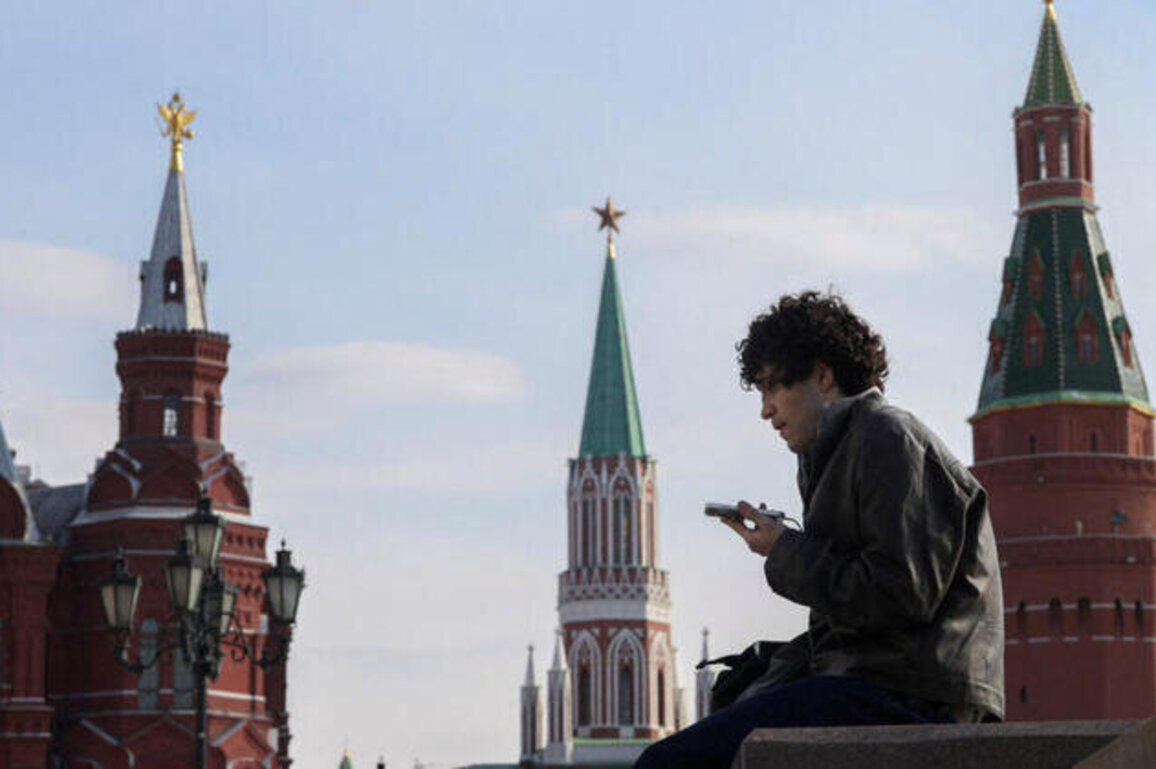
Moscovites woke up on March 6 to an inconvenient new reality: the city centre no longer had a mobile internet connection.
Residents with smartphones were suddenly cut off from browsing online, using messenger appsorcompleting everyday tasks like ordering taxis, using contactless payment systems and evenaccessing public toilets.
Even stranger was the lack ofcommunicationas to why the blackout was happening. TheKremlincited security reasonswithout saying how long the cuts would last.
As the restrictions continued, WiFi continued to provide internet in homes and other buildings as sales of paper maps, pagers andwalkie-talkiessurged.
Russian daily newspaper Izvestia ran afront-page cartoonshowing residents confused that their smartphones had been replaced with bricks as carrier pigeons swooped through the skies of the Russian capital.
Then, three weeks after it began, the block wassuddenly lifted without warningon March 25, although connectionremainedpoor in many areas.
At the same time, a secondblockade has begunin Russiassecond-largestcity, St Petersburg.
This time,the government warned the citys 5.6 million residents in advance thatinternet outages could be imminentagain, citing security reasons.
White list
InMoscow, internet restrictionsare not new.GPS has often been unavailable since Russias full-scale invasion ofUkrainein February 2022.
But thewidespreadinternetoutagein Russias two largest cities reflects a trend that has been going on in the rest of the country for the past year.
In regions close to the Ukrainian border and increasinglythroughout Russiafrequent internet outages have been justified by the authorities as a response to the threat of drone attacks.
Read moreRussia and Ukraine escalate drone attacks as Moscow starts spring offensive
In November 2025,57 Russian regions,on average,reported daily disruptions to mobile phone links, according to Na Svyazi, an activist group monitoring shutdowns.
Such is the sophistication of Ukraines current drone technology that no region ofRussiacan feel safe from attack,said Sergei Shoigu, the secretary of Russia's powerful Security Council,on March 17.
In many regions, only a handful of websites and online services remained available during connectivity blackoutsthose on the government-approved white list.
The list is largely made up of official websites, and included the unencrypted statemessaging app Max,which hasbeen pre-installed on phones and tablets sold in Russia since September.
The app which is not available inEuropeaims to be omnipresent in Russia, combining social media and messaging functions with access to government services, a digital ID card system, banking and payments.
State surveillance
As Russias internet users are increasingly forced to use Max, there are serious and valid concerns about government surveillance on the app, said Oleg Ignatov,asenior Russia analyst at Crisis Group.
And many users are wary of being monitored. If you live in Russia, you would never discuss anything sensitiveon Max. You use a different messenger and discuss it in a different way, Ignatovsaid.
But different messaging apps are becoming harder to come by.
The government, citing security concerns, plans to banthe encryptedTelegramapp which hasmore than 96 million usersin Russia and plays asignificant rolein military communications andrestrict Western platformsincluding WhatsApp,YouTubeandMeta.
In this context, the internet outages look like part of a larger effort toisolatethe country from the information world beyond Russia, and also to make it more difficult for people to communicate among themselves withinRussia, said Nigel Gould-Davies, senior fellow for Russia and Eurasia at the International Institute for Strategic Studiesin London.
Ramping up control
The sudden outage in Moscow has fuelled speculation that the Russian government plans to ramp up online control and surveillance.
It happenedsuddenly,without explanation, and the problem is that nobody knows why they imposed such restrictions, said Ignatov.
The internet cuts also provoked rare opposition. Even newspapers normally loyal to the governmentcritiqued the measureas the outage sparkedpublic outrage and caused economichardship.
In the first five days of restrictionsalone,companies in Moscow recorded lossesequivalent to nearly $63 million,according to the Russian financialnewspaper Kommersant.
That the government would take such a risk sets a worryingprecedent, thatthe Russian state, if it felt it needed[to], could impose a more long-term restriction on mobileinternet,Gould-Davies said.
The authorities upset a large number of citizens in its capital, and you don't do that unless something important is at stake.
AsMoscowcame back online, Russia's interior ministry issued awarning on Thursdayagainst taking part in "unauthorised public events", citing an "increase" in calls for rallies.
"All attempts to hold such events will be immediately suppressed, and their organisers and participants will be detained," it said in a statement.
Originally published on France24