


(CN) - Several Republican-controlled legislatures immediately began looking at ways to eliminate or dilute majority-minority districts after the Supreme Court weakened federal Voting Rights Act provisions Wednesday, though tight election timelines may constrain immediate changes.
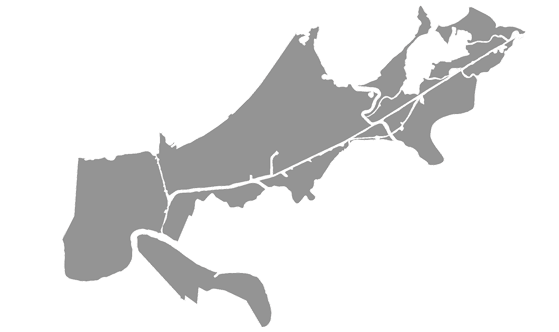
In Louisiana, Secretary of State Nancy Landry certified an emergency under state law, while Governor Jeff Landry issued an executive order suspending the May 16 and June 27 U.S. House primaries. The Legislature is reviewing options for a new map.
"The best way to end race-based discrimination is to stop making decisions based on race," Landry said in a statement Thursday. "Allowing elections to proceed under an unconstitutional map would undermine the integrity of our system and violate the rights of our voters. This executive order ensures we uphold the rule of law while giving the Legislature the time it needs to pass a fair and lawful congressional map."
Late Thursday, Democratic congressional candidate Lindsay Garcia filed a federal lawsuit claiming the suspension is unlawful and causes immediate, irreparable harm. She says early and absentee voting is already underway, the governor lacks authority to suspend elections and the selective targeting of U.S. House races supports a claim of intentional racial discrimination under Section 2 of the Voting Rights Act.
In neighboring Mississippi, Governor Tate Reeves had pre-announced a special legislative session, primarily for state Supreme Court districts but with the potential to address congressional maps. Legislative leaders immediately called for analysis of the ruling's impact.
In Alabama, Governor Kay Ivey explicitly ruled out an immediate special session for redistricting but on Thursday, Attorney General Steve Marshall filed emergency motions with the U.S. Supreme Court seeking to allow the state to use its 2023 map with only one Black-majority district. A federal court had rejected two of Alabama's attempts at new maps, since they did not include a mandated second majority-minority district. Judges ordered the use of an independently drawn map until 2030.
"The Supreme Court has now made clear that you cannot assume race and politics are the same thing, you have to actually show they're separate," Marshall said in a statement. "Because the lower court's injunction cannot stand in light of the Supreme Court's ruling, we have asked the court to lift the injunction. Alabama deserves the right to use its own maps, just like every other state."
The same day as the Supreme Court's 6-3 Louisiana v. Callais ruling, the Florida Legislature passed new congressional maps now awaiting Governor Ron DeSantis' signature. The maps, prepared in anticipation of the ruling, are drawn with the aim of flipping as many as four Democratic-leaning seats by reducing minority-opportunity districts.
In Georgia, South Carolina and Tennessee, GOP leaders and lawmakers have issued statements praising the ruling and calling for potential redraws to reshape majority-Black Democratic districts, but no special sessions, new maps or formal actions have been announced as of Friday.
Mid-decade redistricting remains unlikely in South Carolina in the near term as leaders have rejected calls for a special session, claiming their map is already optimized for Republican strength.
But analysts expect longer-term ripple effects favoring Republicans in the South by facilitating the elimination of several majority-minority districts beyond the 2026 election cycle.
"It's just a matter of time that southern states that are uniformly led by Republicans are going to dismantle some, if not many, or all of their districts that were required to be drawn to give minority voters representation under Section 2 of the Voting Rights Act," said Rick Hasen in a phone call Friday morning. Hasen is director of the Safeguarding Democracy Project at UCLA School of Law.
Emergency postponements of elections are extremely rare, Hasen said, and usually due to natural or manmade disasters, including 9/11 in New York.
"This is not a disaster. This is a political opportunity, so we'll see if state courts allow it to go forward, and if the federal courts do as well," he said, noting the plaintiffs in the Louisiana case still have an opportunity to request a rehearing.
Hasen acknowledged that several Democratic-controlled states have no Republican representation in Congress, but Democrats may be left with no response to Callais other than winning more statewide offices, in the hopes of blocking proposals for extreme gerrymanders.
"The Voting Rights Act never required proportional representation, but it did require minority voters to get a fair chance to elect their candidate of choice," he said. "When you talk about places like Alabama or Louisiana, their significant African-American population and the idea that they would have no representation in Congress is a huge step backwards in terms of the equal protection of the laws and the promise that the Voting Rights Act initially gave to those voters and to everyone."
Another option would be Supreme Court reform.
"The immediate question is whether states are going to be able to reschedule their elections and draw new maps that might minimize minority voting power, but we'll feel the polar effects of this in 2028 and 2030," Hasen said.
Source: Courthouse News Service